
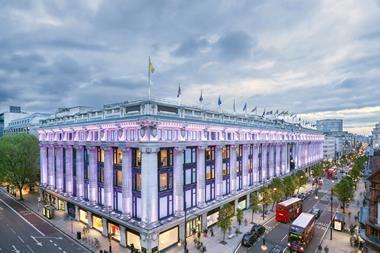
Selfridges is running two strategies at once. Both are working.
Selfridges has spent the last few years proving it can reinvent itself faster than the high street around it can decline.
This year’s move has been upmarket. A private members’ club on the fourth floor, a £20,000 minimum spend, its own entrance and lift — built to court the kind of client Harrods and Mayfair’s private clubs have had largely to themselves.
And yet the best-selling product in the building isn’t anything from that floor. It’s Jellycat, the plush toy brand, generating around £1 million a month at the London flagship alone.
So Selfridges is chasing the ultra-wealthy while its actual engine is a stuffed animal under £100. Both things are true at once. Both are working.
The real strategy isn’t the club, and it isn’t the toys
What has kept Selfridges relevant isn’t either of those propositions in isolation. It’s the constant churn of reasons to physically go there.
The Corner Shop on Oxford Street still pulls major names: Dior in January, Coach’s interactive pop-up built around the brand’s “spirit of play” in spring, CELINE over the summer. Brands queue for the slot despite the reported £200k in weekly sales needed to hold it.
That queue is the point. Selfridges has built a space where the cost of entry is high and the demand is still there, because the footfall it generates can’t be replicated on a brand’s own site. The retailer isn’t selling square footage. It’s selling access to an audience that has already decided the building is worth a trip.
The next residency shows how far that logic now extends. Running through to 5 September, “Saudi: Sky’s the Limit” turns the Corner Shop into an immersive destination for more than 20 Saudi fashion, beauty and food brands, framed around the kingdom’s heritage, craftsmanship and design talent. It’s been created with Milaf Global, a PIF-owned food and beverage group — and PIF, Saudi Arabia’s sovereign wealth fund, holds a 40 percent stake in Selfridges alongside majority owners Central Group.
That last detail changes how the takeover reads. This isn’t a brand renting a slot; it’s a shareholder using the platform it part-owns to introduce a portfolio of national brands to an international audience. The Corner Shop has moved from a retail format to a piece of soft-power infrastructure.
It also sits neatly alongside the fourth-floor members’ club rather than in tension with it. A residency built around Gulf design, luxury craft and provenance speaks directly to the client the club was built for — high-net-worth international visitors, many of them from the region, who are exactly the audience Harrods and Mayfair’s private clubs have spent decades cultivating. One floor gives that customer a private room and a £20,000 threshold. The ground floor gives them cultural recognition on the busiest retail street in Europe. The two are the same play, executed at different price points and different levels of visibility.
Which is the more interesting read on the Jellycat contradiction. Selfridges isn’t running one strategy for the wealthy and another for everyone else. It’s running one building that makes both audiences feel it was designed for them.
What has kept Selfridges relevant isn’t either of those propositions in isolation. It’s the constant churn of reasons to physically go there.
Rotation is an operating model, not a marketing calendar
The part that tends to get underestimated is the operational discipline underneath it.
A space that changes tenant every few weeks can’t be rebuilt from scratch every few weeks. It needs infrastructure designed for turnover: services and structure that stay, surfaces and content that change. Screen arrays that get reprogrammed rather than replaced. Lighting rigs and kinetic elements that can be re-choreographed for a new brand’s identity without touching the ceiling. Scent, audio, and control systems that carry over. Modular fit-out that can be struck and reinstalled without a month of downtime eating the commercial case.
Get that wrong and the economics collapse — every changeover costs more than the residency earns. Get it right and the same footprint can host a couture house in January and a leather goods brand in July, each feeling purpose-built.
Rotation looks like a creative decision. It’s an engineering one.
The wider picture
Elsewhere in London, the same playbook isn’t landing. Harvey Nichols is reportedly up for sale. Harrods has narrowed its focus to a specific high-net-worth client base rather than broadening its appeal.
Department stores used to be the life of the high street. As more brands move direct-to-consumer, losing that anchor entirely would be a real loss for the industry — not only for the stores themselves, but for every brand that relies on a destination it doesn’t have to build alone.
Selfridges is one of the few still giving people a reason to walk through the door. The interesting question for the rest of the sector isn’t whether to copy the members’ club or chase the next Jellycat. It’s whether their spaces are built to change quickly enough to keep earning that trip.
Image Credit: Retail week.